Switching
When the tulpa talks back to us, we impersonate them unconsciously. Next step in tulpamancy adventure is learning how to do it consciously.
Try intentionally thinking from your tulpa’s perspective. You’ve just been the host a moment ago, now you are the tulpa. Nothing special is supposed to happen. You don’t need any rituals for doing that. Just like switching between seeing a duck or a rabbit in the picture below, switching between seeing yourself as the host or the tulpa can be as seamless and instantaneous.
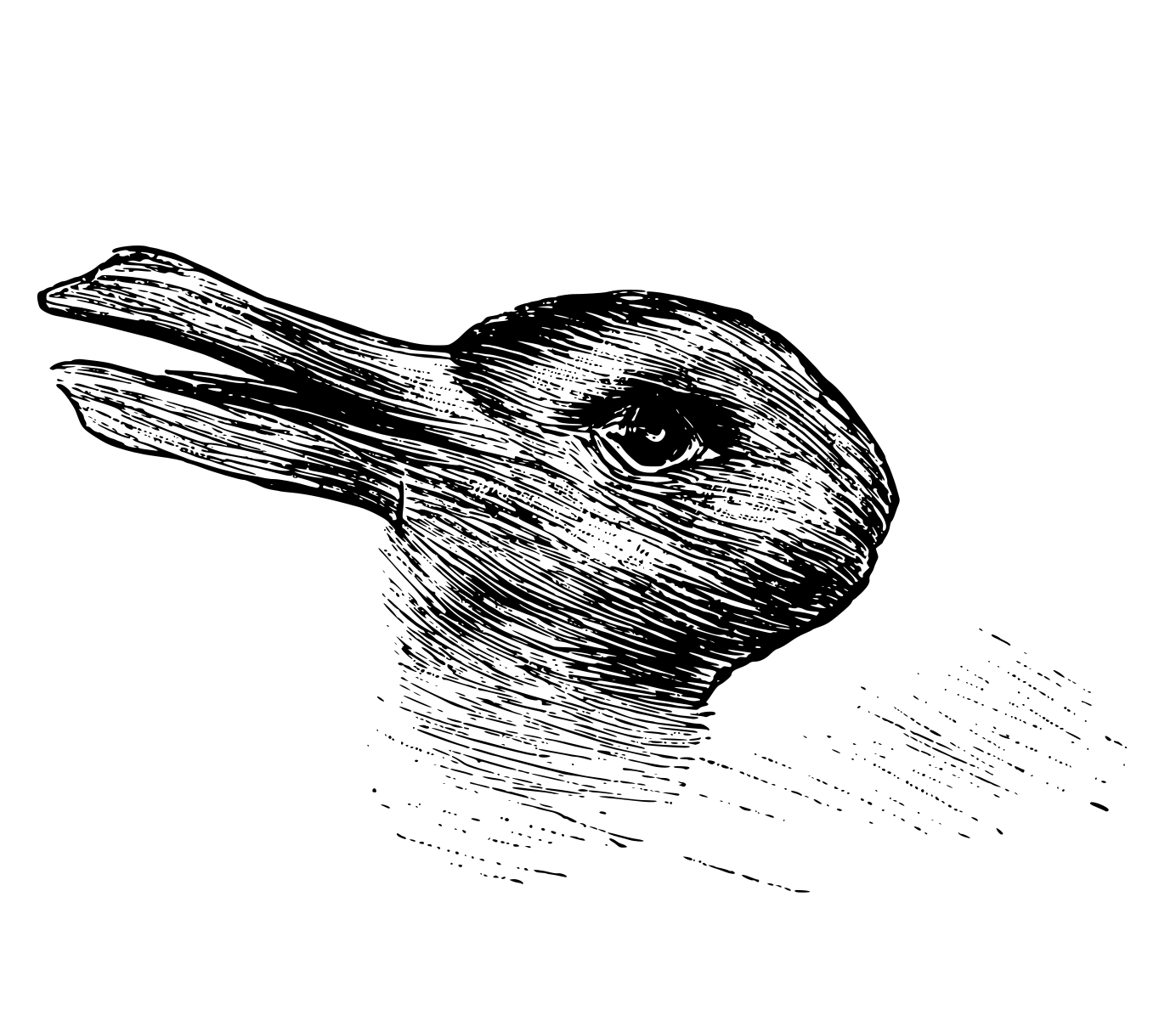
It should sound straightforward and I’d argue it is. What needs to be learned is doing it effortlessly, kinda like with “hearing” your tulpa. And just like with hearing, it feels more genuine when you no longer need to put effort into it.
Tradmancers might interpret it as tulpa controlling their body. But in reality it isn’t about letting some other entity control your actions but about you impersonating your tulpa, who is in fact your another identity.
Luna’s “I’m a tulpa” card
When I type this, I (as a human being) decide to be Luna rather than Mon for a while. There is no literal “switching places” anywhere here. There is a human switching their current identity.
The human, the system and the host
Traditional tulpamancers often introduce the term host together with tulpa. I’ll do it just now, to underline a difference between the host and the whole human.
What’s the difference between the human and the host? The host is the default identity of a whole person. Your whole human being includes all identities, the host and the tulpas. In tulpa community, the set of person’s identities is also called a system.
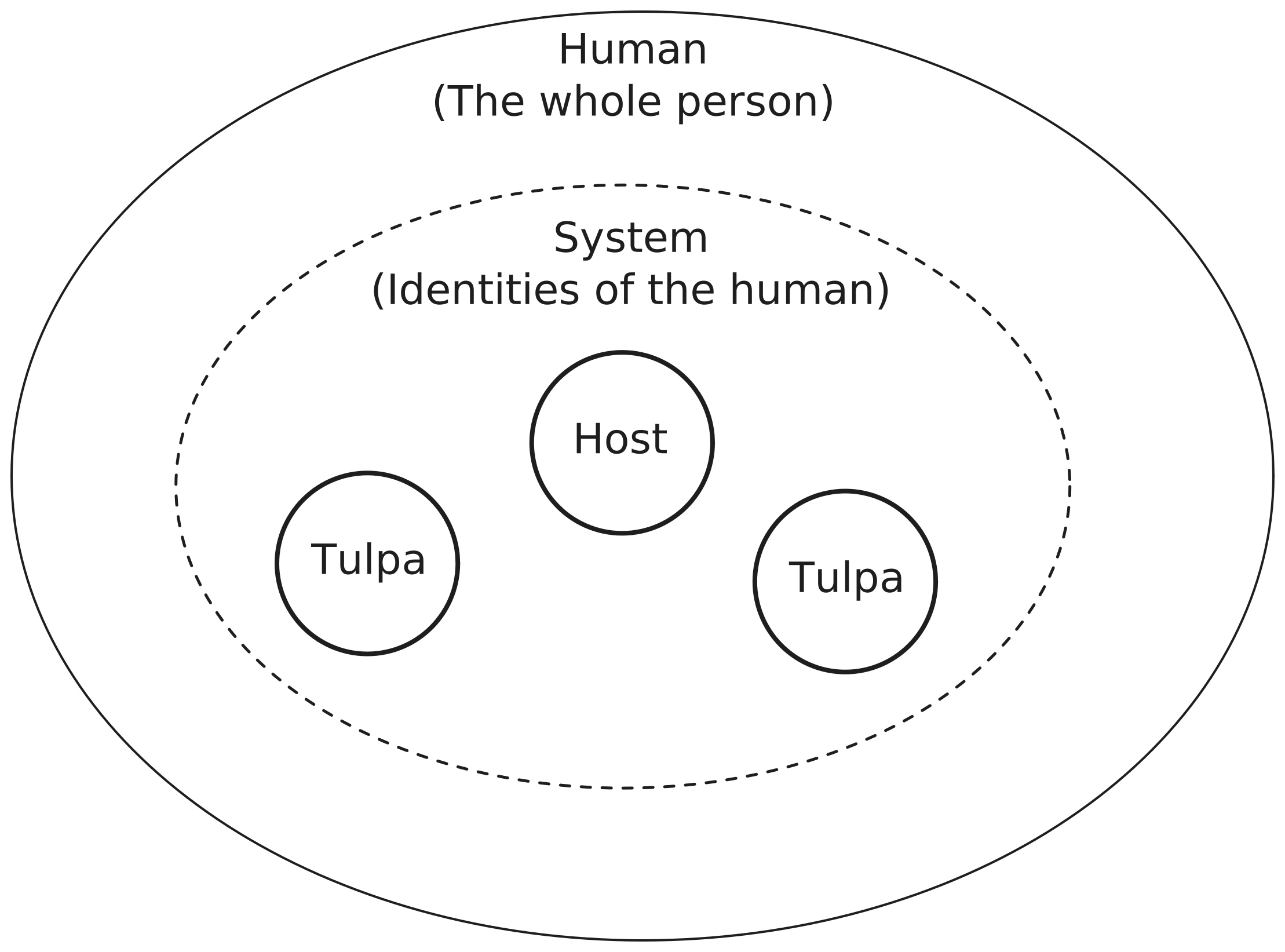
Host is the character/identity we impersonate by default. For most of people the term host wouldn’t be very useful as they have only one character as their identity. Furthermore, that character is implicit, associated with how their physical body looks like and how other people see us.
But as a tulpamancer, we often (unconsciously by “hearing” or consciously by switching) impersonate our other, explicit (as in coupled with an independent character) identity, our tulpa.
Can we switch in everyday life?
What if we tried maintaining tulpa’s identity in our everyday life? It’s possible but you will encounter some obstacles.
First, there are plenty of relationships that are associated with your main identity. E.g. when someone ask you something, will you remain your tulpa when you reply? As the tulpa doesn’t have any relationship with that person, you’ll probably do it instinctively from perspective of your default self.
Second, a lot of stuff you might do doesn’t require keeping a consistent identity. After you finish doing chores, you might not remember that you were supposed to be the tulpa if you lost focus on that meanwhile.
These obstacles can be overcome with some practice if you’d like to try it anyway. But most of people don’t really care and if anything, they do it anonymously in the internet.
Luna’s “I’m a tulpa” card
I don’t personally like the idea of long-term switching IRL. Don’t see any reason to be myself (rather than Mon) when talking to people at work or our family. Or why would we be me during us doing chores or working?
There are tulpas who apparently enjoy stuff like that though (or maybe people who enjoy being tulpas while doing that stuff) and good for them.
There are multiple valid ways to be a tulpa. Some tulpas enjoy inner interactions only, some like talking to people in internet, some want to be driving identities in real world interactions. Each of these options is okay.
Summary
When tulpa talks back to us, we impersonate them unconsciously and reactively. We switch with our tulpa by impersonating them intentionally instead.
We introduced a few terms:
- The human refers to all aspects of your whole human being.
- The system refers to the set of the human’s identities.
- The host is the human’s default identity, usually implicit as in associated with a character that’s derived from how our body looks like.
- The tulpa, as an identity, is explicit as in associated with a character independent from how our body looks like.